
Hi again!
In this blog, I intend to explore some design thoughts I’ve had whilst replaying through the 3D Zelda games. Namely, Ocarina of Time, Majora’s Mask, and Twilight Princess. I plan to analyse my experience with the rupee economy in these games and deep dive into the reasons behind some unique frustrations I’ve had with it, highlighting key areas I believe it affects, and how I might have approached improving it.
Let’s outline the core problem in this blog through a description of my first experience:
With a full 99 Rupee wallet in Ocarina of Time, I explore and encounter a secret room whilst backtracking through Goron City. I blow through some rocks to access it. Then, breaking through many more rocks I navigate to the front and discover a large chest. Opening it with a big exciting cutscene, it reveals I got the rarest rupee in the game (worth 200), but then because of the max wallet size, the reward is deleted and I am left with nothing. I can’t return to get it again.
I remember how unfair this felt, and worrying if there’s something I may have really needed this money for in the future. As the problem compounded over the course of the game, I recall thinking:
“Should I open this chest? I have no idea if I’m going to be wasting Rupees if that’s what’s inside.”
“But it might contain a key item…”
“Should I try exploring that secret place right now…? Or try to find it later…”
But don’t just take my word for it!
Here’s some funny shorts I found from the Zelda community that demonstrate similar frustrations with the systems pretty effectively.
This is the focus of the blog. So, lets discuss this problem and what exactly is the culprit here.
Let’s get started.
First, let’s explore how the Rupee economy is similar across each of these games, how each one differs, and the pros and cons of each of their distinct approaches.
Core Similarities:



- Rupees are the primary currency of the game.
- Rupees can be spent to buy items from shops and pay for minigame fees.
- Rupees can be found in chests, breakable objects, secret areas, and earned via minigames.
- Your Rupee Wallet has a capacity, and can be upgraded via optional quests.
- The Rupee Wallet capacity is invisible to the player until they learn about it by reaching the first limit, or earning capacity upgrades.
- There is no defined “Rupee Chest” appearance. They can appear in any small or regular chest.
Key Differences:
- The first Legend of Zelda game to introduce an upgradable wallet capacity.
- All Rupees earned that exceed the current wallet capacity are deleted and unrecoverable.
- Wallet upgrades are optional and earned via redeeming Gold Skulltula tokens at a hidden NPC in Kakariko Village.
- Your Rupee wallet capacity starts at 99 (Child’s Wallet).
- Upgrading once gets you 200 capacity (Adult’s Wallet).
- Upgrading a final time gets you the final capacity of 500 (Giant’s Wallet).
- Upgrading once gets you 200 capacity (Adult’s Wallet).
The Economy in Practice
The first area in Ocarina of Time is a open-zone tutorial that lets the player explore freely and learn elements of combat, exploration, and most importantly… Rupee economy.
One of the 2 requirements to leave this area requires farming enough Rupees to purchase a Wooden Shield from the Kokiri Forest Shop. This, through teaching the player how to earn and spend, places a lot of importance on the economy early and gets the player thinking about how they might earn Rupees going forward.
It is worth noting that the Rupees gained in Kokiri Forest are much harder and slower to earn compared to when you leave it for Hyrule Field onward. After, it is very apparent that the amount of meaningful Rupee “sinks” are lacking in the open world.
Meaningful sinks is the key distinction here, because Ocarina of Time actually has quite a few places to spend your Rupees around the world; Deku Scrub hideouts, shops, fishing, market minigames, and the Happy Mask questline to name a few.
However, there are four core issues with how the system rewards you for spending:
- Shops mainly sell consumables.
- These are effectively useless as consumables are extremely abundant in the game world.
- Non-consumable / Rupee rewards are not signposted clearly.
- If you suspect you might earn Rupees from an activity, the player will likely not return to continue it despite the reward. This is a shame because there are quite a few upgrades hidden away in minigames and shops which you wouldn’t have otherwise been incentivised to engage with.
- Some minigames and activities cost Rupees to play, then offer Rupee rewards.
- The wallet limit causes this to have diminishing returns, forcing the player out to continue elsewhere.
- You only need 40 Rupees to beat the entire game (buying the starting Shield).
- This undermines the importance placed on the economy during the early segments.
- The Biggoron’s Sword questline does not require Rupees to complete, though a similar questline in Twilight Princess implements this idea better, which I will discuss later.
The result of these issues is that the act of collecting a Rupee beyond your capacity is relegated to mostly a satisfying sensation accompanied by a glittery noise. Which, I admit, is still pretty fun and was probably why I still wanted to keep walking over them.
The “Chest Problem”
In addition to the lack of sinks, there still lies the frustration in the way Ocarina of Time handles exceeding your wallet capacity, specifically in how the system interacts with treasure chests.
This happens to be the pain point that sparked me to analyse this topic to begin with.
Losing excess Rupees when opening a chest is a terrible feeling, especially as they are completely unrecoverable. It is like having a decadent birthday cake presented at your party, just for the waiter to drop it on the floor right before they reach your table. A mechanic that is set out to reward curiosity and exploration ends up becoming a reason to condition you away from that goal.
The unfair feeling is rooted in the fact the player is not at fault for being punished.
The player has no way to know if a chest has a Rupee in it, any way to immediately spend Rupees to prepare for it, nor a way to recover them if the excess is lost. Yet, the player cannot avoid this unfair feeling because key items required to beat the game are also littered in those same chests.
It’s worth noting that this feeling tends to just be for chests, because running into loose Rupees in the game world is quite fun despite the number not going up. Which makes me confident that the problem lies in the ceremony of a chest reveal.
The designers at Nintendo clearly identified these issues as the series developed further, as the designs regarding both wallet capacity and sinks are handled differently in future titles.
Okay. Let’s wrap up Ocarina of Time by summarising both perspectives of its approach.
Strengths:
Weaknesses:
- The introduction of wallet upgrades gives the player more ways to be rewarded.
- The wallet capacity stops players from endlessly farming breakables or minigames for Rupees.
- Aligns focus to the fairytale adventure player fantasy.
- Wallet capacity stops the player from affording expensive items early, even if they are optional.
- Being gated by expensive items despite having a small wallet generates curiosity and a desire to explore for a solution.
- Aligns with Zelda’s puzzle philosophies.
- High likelihood of feel-terrible moments when opening Rupee chests.
- Conditions the player away from exploration and towards “gaming” the economy to avoid frustration.
- Little-to-no meaningful “sinks”.
- Consumables are so abundant, that shops hold little value outside of narrative.
- Rupees hold very little intrinsic value due to their limited usability.
- Wallet upgrades being optional and possibly missed, with or without knowing to kill Gold Skulltulas, can further compound economy problems.
Key Differences:
- Due to the time loop mechanic, held Rupees are lost upon a new cycle.
- You may deposit any amount of held Rupees into the Clock Town Bank before a cycle reset to keep them.
- All Rupees earned that exceed the current wallet capacity are still deleted and unrecoverable.
- Rupee chests are reset upon a new cycle, whilst Key Item chests are not.
- The first wallet upgrade is optional and earned via depositing Rupees with the Clock Town Bank.
- The second upgrade requires completing an unrelated optional collectathon quest in a hidden location.
- Your Rupee wallet capacity starts at 99 (Child’s Wallet). The same as before.
- Upgrading once gets you 200 capacity (Adult’s Wallet).
- Upgrading a final time gets you the final capacity of 500 (Giant’s Wallet).
- Upgrading once gets you 200 capacity (Adult’s Wallet).
The Economy in Practice
In contrast to Ocarina of Time, there is little to no onboarding with the Rupee economy in Majora’s Mask. The starting tutorial opts to have you skip the teachings in of the previous game and focus on the mask mechanic via the Deku Scrub moveset. Tutorials to teach the economy take a backseat in this game, as it was designed for players who had already finished Ocarina of Time.
“We didn’t put in any kind of elements where we show people how to play this game. The game was made for those who have played Ocarina of Time, so I felt like there wasn’t a need for step-by-step instructions.”
– Eiji Aonuma on Majora’s Mask https://iwataasks.nintendo.com/interviews/3ds/majoras-mask-3d/0/1/
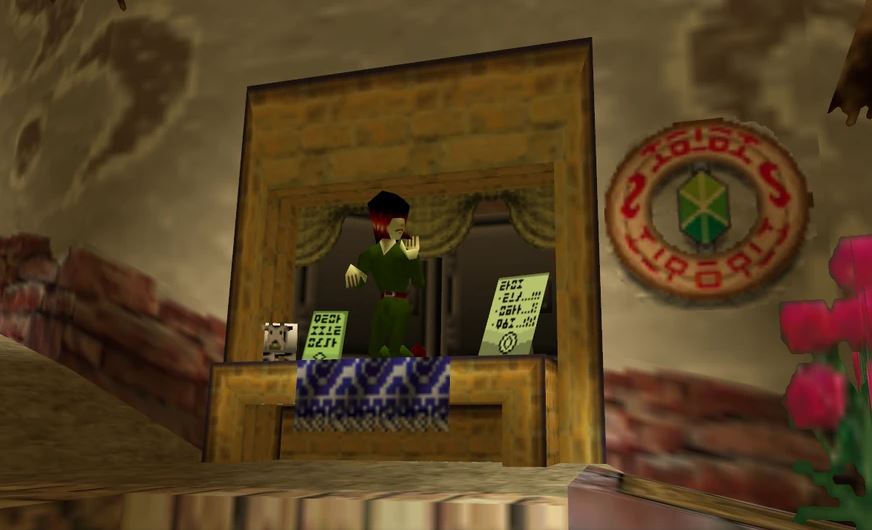
After the Deku Scrub tutorial, you are left to explore Clock Town (the central hub) with a vague destination provided. This loosely-restricted exploration sequence encourages you to look around the different locations. One of these is important to us, the Clock Town Bank – a place the player will very likely discover.
Much like the game before it, Majora’s Mask lacks a lot of meaningful sinks, falling into similar spending pitfalls. However, the Clock Town Bank is a brand new elegant solution that remedies a lot of the friction with the economy.
How it works is by allowing the player to deposit or withdraw any Rupee amount at any time upon visiting. These Rupees are kept and persist between resets, acting as a kind of meta-progression that helps maintain a sense of forward momentum even if your progress elsewhere in the current cycle was disappointing.
This effectively makes the bank mechanic an infinite sink.
Additionally, engaging with the bank mechanic rewards you with a wallet upgrade the more Rupees you deposit. This means you earn -> bank -> earn more -> bank more -> repeat. Although you only earn wallet upgrades at defined intervals, meaning the curve isn’t perfectly smooth, it remains a brilliant early incentive to engage with the mechanic and begin prompting the player to manage their Rupees. It helps that the warp location in Clock Town is right next to it too, reinforcing its use. Very elegant. Twilight Princess would look to borrow this philosophy soon after.
Other notable sinks include the Tingle Maps which the player can purchase (ranging from 5 to 40 Rupees) to help navigate the game world, but are otherwise optional.
Minigames return, which require a small Rupee fee to enter. Each one rewards you with a Heart Piece for your first win, with the rest only granting Rupee rewards.
At its best: spend small -> win permanent upgrade
(Heart Piece, Quiver, etc).
At its worst: spend small -> win bigger
or
spend small -> win nothing
Like Ocarina of Time, the game requires very little Rupee spending to complete. The Goron Powder Keg is the only required purchase to beat the game, costing 50 Rupees. Consumables in the world are arguably more abundant in this version than Ocarina too, and so shops are equally as low-impact to the player’s experience.
Most side content requires a specific key item combination to complete, or knowledge gained from experience to know where to be at what time – but no need to purchase anything. This is fine, as it enhances the player’s experience in other areas, aiding the sense of adventure and mastery of knowledge over the cycle.
However, with a lack of Rupees needed for the golden path and side content, there are not many reasons to be excited about them beyond the satisfaction of seeing a number go up. This diminishes the player’s joy in them as a reward and so exploring the world outside Clock Town seems less exciting.
Has the “Chest Problem” changed?
No.
You still lose all your Rupees from a chest when you gain a Rupee reward. However, the sheer abundance and saving potential available to the player makes gaining Rupees at all feel less frustrating as the reward was never too interesting to start with.
Also, the fact Rupee chests reset each cycle lessens the frustration from knowing they are unrecoverable, but the knock on effect is that Rupees have even less value as they are now a commodity that can be farmed given enough time. This reduces the friction of spending any Rupees in the game, as you always know you can get them back given enough patience.
This can be positive, as the cycle creates a lot of tension as it is, and tripping players up with complex Rupee management may have been more frustrating in testing than just removing it.
That’s it for Majora’s Mask! Let’s see what we’ve learned.
Strengths:
Weaknesses:
- The Clock Town Bank acts as an infinite Rupee sink and therefore helps create a constant feeling of forward progression regardless of how much you achieved that cycle.
- The appearance of a bank affords to the player a permanent storage location for their Rupees. Feels natural.
- Early-game players will want to keep their small amount of Rupees, therefore are naturally encouraged to engage with the bank.
- They are then rewarded by a higher wallet capacity. Elegant design.
- Feel-bad moments still exist when you lose Rupees from a chest, despite the frustration being lessened by the banking mechanic.
- Rupees can feel more worthless than before.
- The sheer abundance you can save by the late-game will never scale with the available meaningful sinks of which there are little.
- Rupee chests reset, reducing the friction of where and what to spend on. It becomes a matter of patience rather than careful choice.
- A sense of discovery focused around optional key items, location, and mastery of the cycle diminishes Rupee value because the two rarely intertwine.
Key Differences:
- Excess Rupees from chests are now placed back in them, with their icon returning to the Compass.
- Wallet upgrades are optional and earned via redeeming Gold Bugs found around the game world to Agitha at Agitha’s Castle in Castle Town.
- Your Rupee wallet capacity starts at 300 (Wallet).
- Upgrading once gets you 600 capacity (Big Wallet).
- Upgrading a final time gets you the final capacity of 1,000 (Huge Wallet).
- Upgrading once gets you 600 capacity (Big Wallet).
Twilight Princess HD Differences:
- All Rupees earned that exceed the current wallet capacity are deleted and unrecoverable again!
- Adds a fourth wallet capacity upgrade, rewarded for completing the Cave of Shadows.
- Your Rupee wallet capacity starts at 500 (Wallet).
- Upgrading once gets you 1,000 capacity (Big Wallet).
- Upgrading a second time gets you 2,000 capacity (Huge Wallet).
- Upgrading a third and final time gets you 9,999 capacity (Colossal Wallet).
Only in the HD Version.
- Upgrading a third and final time gets you 9,999 capacity (Colossal Wallet).
- Upgrading a second time gets you 2,000 capacity (Huge Wallet).
- Upgrading once gets you 1,000 capacity (Big Wallet).
The Economy in Practice
The tutorial section of Twilight Princess is extremely similar to Ocarina of Time. An enclosed village that acts as a learning environment for exploration, new mechanics, combat, shops, and Rupee management!
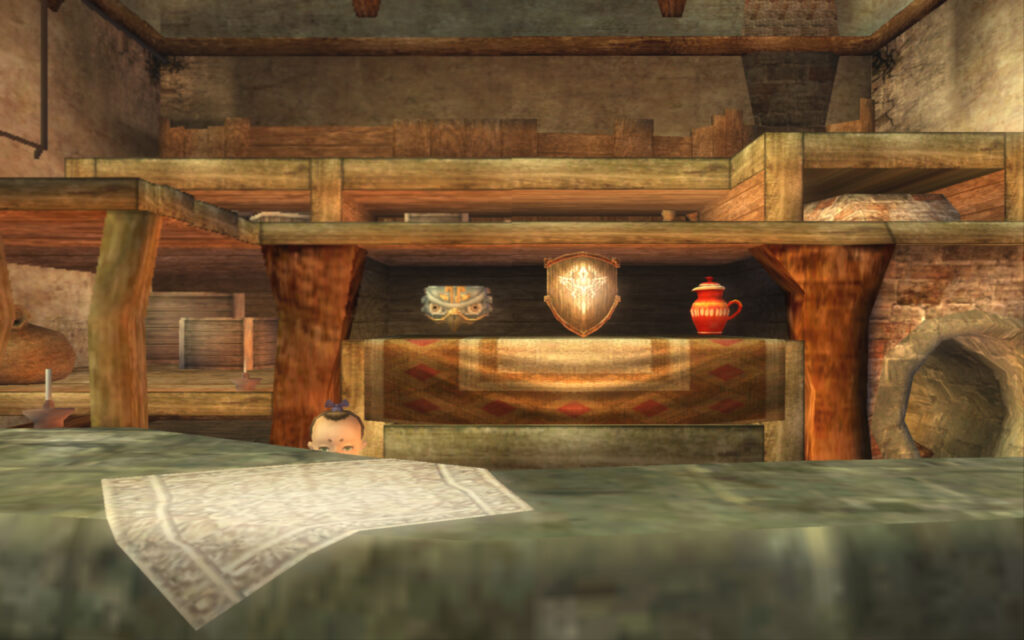
To progress, you will require a minimum of 30 Rupees to get the Slingshot. This happens to be the only amount of Rupees required to beat the whole game again, much like the other titles on this list. There appears to be a definite pattern to enforce Rupee spending early, then let the player find optional value in it later without it being a gate to progress.
In Twilight Princess, I believe there exists the best implementation of a sink so far and it happens to be more or less required to beat some late-game optional content (which I will touch on soon).
I’m talking about the Malo Mart questline. This is how it unfolds:
| Malo Mart Questline |
|---|
| Save Kakariko Village (non-optional mainline quest) Reward: Unlock Malo Mart |
| ↓ |
| Donate 1,000 Rupees to Malo Mart Reward: New shortcut to the central hub |
| ↓ |
| Donate 2,000 Rupees to Malo Mart Reward: New shop with unique items in the central hub |
| ↓ |
| Purchase the Magic Armour for 598 Rupees from new shop |
| End of Quest |
This optional questline takes the record for the most expensive sink in a Zelda game so far, allowing there to always be a place to spend excess Rupees and keep exploring feeling fresh. It is also satisfying to feel like you are progressing when donating. In a lot of ways, it is the reverse of the Clock Town Bank system in that it is a massive sink but instead of saving you your Rupees, it conversely spends them toward something larger. That something being implied by the narrative to be an “expansion” of some kind.
The real reward isn’t just more consumables this time (which are still pretty useless in this game), it’s the Magic Armour. This item is a equippable armour set that gives you the following properties:
- Constantly drains your Rupee wallet by 1 Rupee per second while worn.
- Any damage transferred to you is redirected to your Rupee wallet, removing a set amount.
This is brilliant!
You are not only rewarded for sinking lots of Rupees throughout the game, but the final reward is another infinite Rupee sink that enhances your combat capabilities and removes the “abundance problem” that Majora’s Mask faced.
Although this is where the Malo Mart quest reaches its proper conclusion… why would we need Magic Armour to protect us in the first place? It turns out there is a very good use for it! In the late-game, there is an optional dungeon called the Cave of Ordeals – a 40 floor gauntlet that requires you to beat it in one run. To access the later floors, you require all the key Dungeon Items, so it’s only accessible and fully completable before the finale of the game.
This gauntlet is extremely difficult, making the Magic Armour have a very good late-game use case. This means the Rupee economy is always challenging you to make decisions throughout Twilight Princess.
One downside of the Malo Mart route is that it only becomes available much later into the game, making the early areas feel fairly sparse in terms of meaningful sinks.
Has the “Chest Problem” changed… yet?
Yes, actually!
In Twilight Princess, opening a chest that would grant a Rupee that exceeds your wallet size instead has Link place that Rupee back into the chest. The chest marker on your map is not removed, effectively leaving it untouched.
This may seem like an overall positive change on paper, however this had some knock on effects to the player experience. In Aonuma’s own words…
“In previous games players used open chests to know they’d visited a location, and this change meant they could no longer do that.”
– Eiji Aonuma on Twilight Princess
https://nintendoeverything.com/zelda-twilight-princess-hd-improvements-for-epona-and-swimming-chests-remain-open/
These players complained that the map markers remaining on chests they had previously opened impacted their dungeon navigation because it confused them on where they had been and where they hadn’t.
The other common complaint was that there were too many Rupee chests! With how little reward variety there is, coupled with the sheer amount of chests in the game, chests became much less exciting to open across the board.
The HD version of the game on Wii U attempted to correct these frustrations by making a surprising change… reverting it back! In the newest version of Twilight Princess, chests act just as they did in previous Zelda games. They delete your excess Rupees and stay open.
Back to square one, then.
Despite the reversion, the designers did expand the wallet capacities across the board in efforts to hopefully have the “chest problem” not happen as often.
Okay! Let’s see what Twilight Princess did and didn’t do so well.
Strengths:
Weaknesses:
- Malo Mart donations and the Magic Armour are a highly effective sequence of infinite sinks that scale from mid to late game.
- Enhances combat capabilities, with a particularly effective use case in the Cave of Ordeals gauntlet dungeon.
- Excess Rupees are no longer lost when opening a chest.
- The “Chest Problem” is gone.
- Solution to the “Chest Problem” now confuses players when navigating dungeons.
- Small amounts of Rupees spread across the larger game world in more chests made rewards even less satisfying and more predictable than previous entries.
- Lack of early-mid game sinks despite enforcing player Rupee management in the tutorial zone.
What are the possible solutions to these systems?
Taking everything we’ve learned so far, it is clear that there are two major problems with Zelda’s economy systems. In this section, we will set clear goals based on our previous findings and attempt to find some solutions.
Design Goals:
Make sinks meaningful to encourage spending
and
Solve the “Chest Problem” player frustration
Possible Solutions:
Create a Narrative Hook to Hidden Content
- When the player opens a Rupee chest and there is excess, trigger unique VFX accompanied by a Navi/Midna dialogue on the first occurrence, hinting at the excess “going somewhere” narratively. Later, the player may discover all of their excess in a secret area stored up, serving as a type of “bank” for the future.
- Setup generates curiosity and encourages adventure.
- Plays on the “meta” and “gamey” aspect of the system interaction.
- Increases content design workload.
- Only solves the systems on that particular game, assuming the gimmick will not be repeated for variety reasons.
- Allows for abundance issues after unlocking, assuming there are no other meaningful sinks to spread total wealth.
- Undermines capacity upgrade limits.
Develop on the Twilight Princess Approach
- Change the icon for what chests have been opened to a unique icon, differentiating it from standard unopened chests. Also, have the chest remain open with a magical hologram visual of the Rupee to physically show you what is inside if you intend to return and take the item.
- Clarifies visuals of physical chests, helping navigation at a glance.
- Clarifies visuals of the map screen, helping navigation further.
- Doesn’t remedy the bad feeling of “needing to come back”, especially if its deep into a dungeon or secret zone.
Send Excess to a Bank
- Magically return any Rupee excess to an existing bank upon opening a chest, accompanied by a visual indicator.
- Removes the feel-bad moment of losing your Rupees.
- Wallet capacity upgrade limits become redundant, as it encourages grinding minigames and resetting breakables in order to collect wealth.
- Discourages adventure and travel.
- Encourages repetitive, degenerate behaviour that feels “metagamey”.
- Relies on the existence of a bank system to begin with.
- If the Rupee excess was instead limited to only Rupee chests, it creates an affordance problem and inconsistencies with other forms of collection, such as finding loose Rupees in the world when your wallet is full.
- Systemic rules around a game with a philosophy of “learned rules” becomes a frustration point.
Give Rupee Chests a Distinct Look
- Represent Rupee chests with a distinct appearance.
- Allows the player to prepare and avoid interacting with a chest if their wallet is full.
- Undermines the sense of adventure and discovery.
- Players that see a Rupee chest in the distance and don’t need it might not even pursue and resolve their curiosity, especially since there are many Rupee chests all over.
Create More Meaningful Sinks
- Create more meaningful sinks across the board. More expensive and interesting shop items, more minigame rewards that aren’t Rupees, higher upfront fees for minigames, questlines that require Rupee progression (i.e. Malo Mart), etc.
- Keeps the tension of wallet limits, encouraging adventure.
- Increases content and design workload.
- Spending is more satisfying.
- Enhances player choice.
- Tensions around where to spend are increased, making spending an interesting activity with short term trade-offs.
Make Consumable Resources Rare
- Breakables do not respawn anymore on room change.
- Consumable items found in shops have more intrinsic value.
- If you smash a breakable either intentionally or unintentionally and don’t need the contents of it, you now feel terrible that you’ve permanently lost it or that you’re already at capacity.
- Critical resource floor for boss fights and high intensity moments are now potentially soft-lockable, or require frustrating backtracking.
Allow Wallet Overflow
- Any excess Rupees collected may now overflow a certain amount (~%20 current capacity)
- Alleviates some of the frustration when a Rupee is discovered, especially in a chest.
- When finding a giant rupee, overflow limits will likely not matter as most of the reward will still be lost.
- Feels like “limits with extra steps”.
- The limits may feel arbitrary and may need to be different between capacity upgrades.
- Risks harming the simple readability of the UX.
- Testing overflow limits requires testing and design workload.
- Doesn’t make much thematic sense to have a wallet that is somehow “over capacity”.
Create More Varied Rewards
- There exists more types of rewards that you may find in a chest, similar to a modern open-world Zelda. New swords, armour, special weapons, optional quest items, etc.
- Chests become more exciting, as there are far more surprises and variety in what to expect.
- Rupee chests become less common, so there is less likelihood of frustrating “chest problems”.
- Magnitudes more design workload and content workload required.
- Older “dungeon item” game structures may struggle to incorporate meaningful tools that don’t overpower and muddle the application of said dungeon items.
My Approach
Each of the above approaches seem to be valid in different ways, with lots of positive and negative tradeoffs that sometimes affect other areas of the experience – not just spending Rupees. We need to be careful that we don’t trip over our own shoelaces and cause dependencies in other aspects of the experience, whilst still tackling our goals.
So… which approach is best?
Circling back to our design goals, it seems like a few of these approaches solve some of the issues quite elegantly without adding much more feature creep. I would opt for a mix of approaches.
First of all, I would implement the Twilight Princess icon and chest change because it appears to get rid of issues regarding clarity and capacity frustrations in one. It also doesn’t have many clear downsides aside from risking creating a sense of “incompleteness” when backtracking. I think this would be worthwhile to head towards while keeping a keen eye on how players react to it in testing.
This leaves us with the other design goal of making sinks more meaningful. So, next I would support the previous approach by creating more reward types too. It is more content design burden, but as long as those rewards/items you find will be interesting, it will hopefully keep chests feeling exciting and varied across the board.
Finally, I would keep the larger wallet capacities from Twilight Princess HD, whilst proportionally increasing the amount of meaningful sinks available to the player. This pairing would hopefully reduce the likelihood of having to return to a chest, keep a reasonable enough limit to discourage degenerate farming patterns, and create a rewarding cycle of spending.
In Closing
Thank you for reading!
This has been my biggest deep dive on the blog yet, so I hope you found this useful and insightful. Feel free to leave a comment down below to let me know what you think, and what your approach would be to this problem.
Ciao!


Another thing about OoT that continues from your Deku Shield point – there are shops that show up fairly early in the game that contain expensive seemingly-unique items like the Bombchus and Tunic upgrades. Since you’ve already had to save up for the Deku Shield once, this seems to imply that you will eventually need to save up to buy those, and also upgrade your wallet once you hit your current cap. However, you can get those items in other ways naturally through the course of the game, so it feels like those shops are either just acting as a teaser for the items, or are misleading you as to the value that rupees have in the game.
OoT feels like it really botched the execution of the ‘wallet’ system, and it seems like a noticeable downgrade from Link to the Past or Link’s Awakening. In LttP the rupee system felt pretty extraneous – there’s a few places where you need rupees, but they’re fairly late in the game, so you will either have them when you need them (like unlocking the first Dark World palace), or you can grind to afford them earlier if you really want to (the Flippers). There’s also a huge sink with the bomb/arrow capacity upgrades. Overall there’s not that many pain points. although not really many interesting decisions either so the system is kind of just serviceable, which I think was fine for the time. Link’s Awakening is kind of similar, but has a really expensive late game purchase, with the infamous twist that you can actually steal it instead of buying it, which is at least one awesome moment that the system allows.